 MemeReply
Meme template · 2 text boxes
Stonks meme
Meme Man in a suit before a stock chart: "Stonks." Mock-genius money moves.
Where it comes from
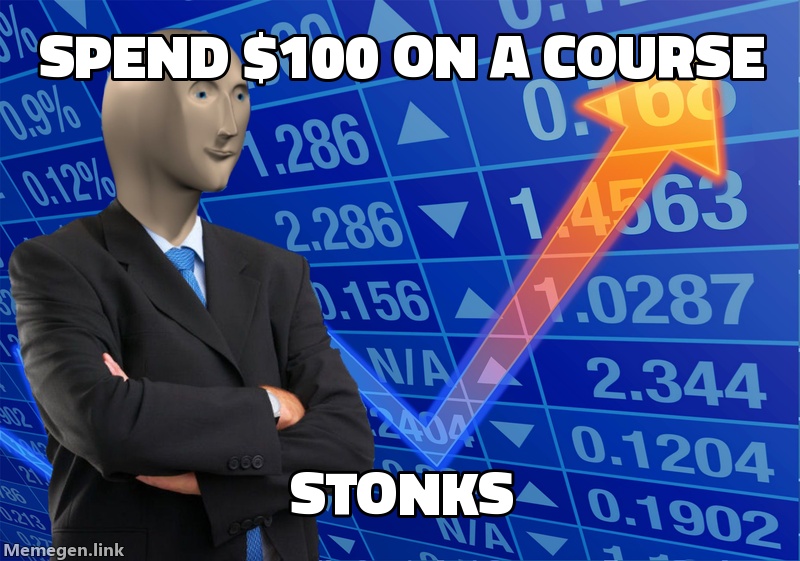
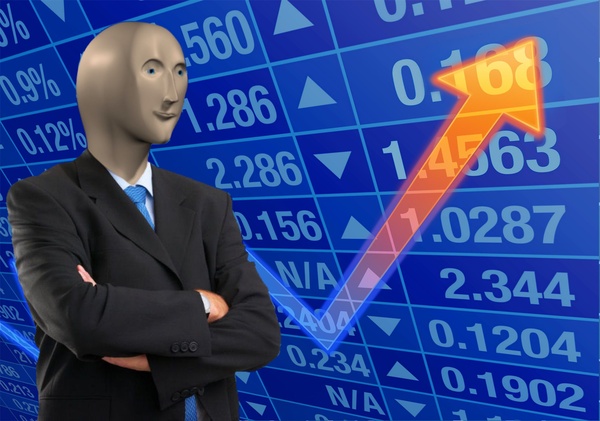
Stonks is Meme Man in a suit, standing in front of a chart that only goes one direction, with the caption "stonks." Meme Man is a surreal three-dimensional head that showed up in the stranger corners of meme pages in the mid-2010s, a face that is almost a person and then isn't. Someone put that face in business clothes and misspelled "stocks." The misspelling is the entire tone. It says the speaker wants the feeling of a financial genius and does not especially want the financial part. Know Your Meme's Stonks entry is the background. The joke rode along later with ironic trading culture, but the picture is older than any one stock forum, and it does not require you to care about markets.
On this template the second line is the big word at the bottom. The classic render leaves the first line empty and puts "stonks" there, so the suit and the chart do all the talking. You can also use the first line as the dubious move and the second line as "stonks," which is how a lot of replies are built: name the purchase, the fee, or the "investment," then stamp it with the fake expertise. The first line is the smaller text up by the head. Do not bury the punchline there. The large type at the bottom is what people read.
The chart in the picture rises. You do not get to decide that. If your caption is about a loss, the rising line makes the loss ironic, which can be the joke, but you should know you are contradicting the drawing on purpose. A sincere stock tip does not belong here. The suit is already insincere.
How people use it
Reach for Stonks when a post treats a questionable decision as a wealth strategy. Someone frames a subscription, a course, a gadget, or a bet as "investing in themselves." The reply puts the actual spend on the first line and "stonks" on the second, and the chart nods along. It also fits brags that are only brags if you do not do the arithmetic. The meme does the arithmetic's facial expression for you.
It is a poor fit for real bad news. If a person lost money they needed, the smirking suit is a cruel reply, not a funny one. The format is for the poster who is performing shrewdness, or for your own purchase that you already know was a bit. Self-own first. Other people's rent is not a chart.
"Stonks" does not have to be the bottom line every time, but if you replace it, replace it with something that does the same job: a fake term of art, a solemn nonsense word, a single stamp of approval. "Synergy," "exposure," "brand." Two full sentences turn Meme Man into a LinkedIn post, and the template is making fun of that post. One setup, one stamp.
You can leave the first box blank when the post itself is the setup. The picture of the suited head and the rising line, captioned only "stonks," is a complete reply to a screenshot of a dubious chart. Adding a sentence on top is for when the original post needs the dubious move named, because the chart in the meme is not their chart.
When to reply with it
- Questionable investments
- Business "wins"
- Line goes up
Example captions
- Spend $100 on a course
- Stonks
- Spend $100 on a course
- Stonks
The smaller upper line is the dubious move. The big bottom line is the fake seal of approval, usually the word stonks.
- Bought the dip
- Stonks
The first line can be the brag you are answering. The chart was already going up. The spelling says you do not trust it.
- Free exposure
- Stonks
A non-payment described as a strategy. The bottom word agrees too hard, which is the disagreement.
- Cancelled the avocado
- Empire
You can swap the bottom word when a different fake honorific fits. It still has to sound like a medal for a tiny choice.
Each line goes in one text box, in order. In the editor, AI suggests captions written for the post you are replying to, and you can change every word.
The blank template
Where it comes from: knowyourmeme.com. Template images can carry their own rights; see template rights.