 MemeReply
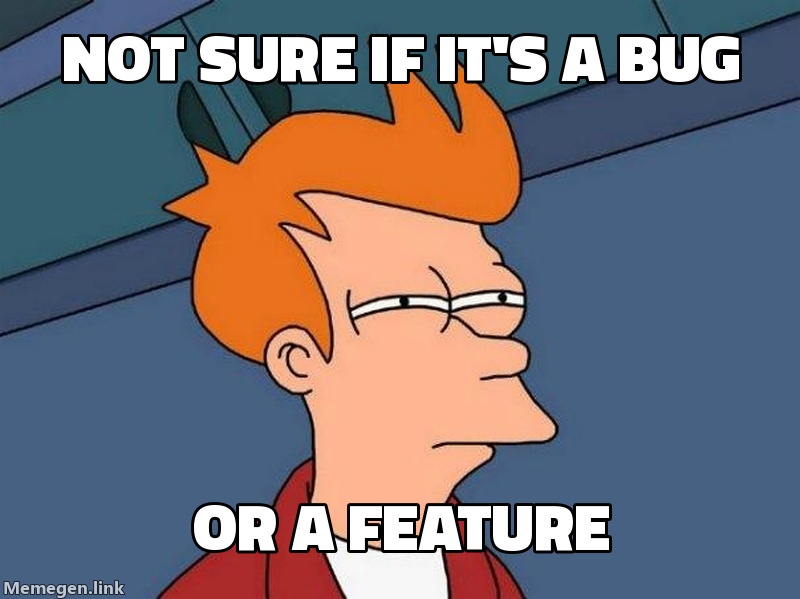
Meme template · 2 text boxes
Futurama Fry meme
Fry from Futurama squinting with suspicion: "Not sure if..." For when you can't tell what's going on.
Feels likeConfused
Where it comes from
Futurama Fry is Philip J. Fry, the delivery boy from the animated series Futurama, caught in a squint. The still is the suspicious one: eyes narrowed, mouth unsure, as if a sentence has two meanings and both of them are plausible. The caption tradition that grew up around it starts with "not sure if" and lands on "or." Know Your Meme files it as Futurama Fry, not sure if. He is not angry and he is not delighted. He is paused between two readings of the same evidence.
Two boxes. The first begins the suspicion, usually "not sure if" plus one reading. The second is "or" plus the other reading. The stock pair is "not sure if trolling / or just stupid," which is cruel when aimed at a real person and useful as a map of the grammar. "Not sure if it's a bug / or a feature" is the kinder office version. Both readings have to fit the same fact. Fry saw one thing. You do not get to introduce a second event in the bottom line. The bottom line is the other theory of the first event.
He can be wrong. The format does not require you to solve the question. A reply that picks a winner in the second line, "or, and I checked, it is a bug," has fired the squint and hired a detective. Let him stay unsure.
How people use it
Use the squint when a post is ambiguous on purpose or by accident. A compliment that might be an insult. A changelog that might be a confession. A "we are excited to announce" that might be a sunset. You put the flattering reading on one line and the grim reading on the other, and you do not add a wink that resolves it. The people in the thread already have a favorite reading. Fry's job is to show both without joining a team.
The first line carries "not sure if" so the second line can be short. Do not repeat "not sure if" below. The "or" is the hinge. If you drop the formula entirely, the squint can still work, but you should keep the two readings visibly alternative. "A promotion / a new way to say layoff" is the same machine without the catchphrase. What breaks it is a second line that is a sequel rather than a rival. "Not sure if the build passed / or I should get lunch" is two tasks, and he only has one screen.
Aim the uncertainty at the post, not at a stranger's intelligence. "Not sure if trolling or just stupid" is the stock example and also a good way to start a fight you did not need. Swap in readings of the situation. The situation can be stupid. The person does not have to be.
Keep both lines in the same person and the same tense. He is looking at one moment. Write the moment twice.
When to reply with it
- Joking or serious?
- Flirting or just being nice?
- Bug or feature?
Example captions
- Not sure if it's a bug
- or a feature
- not sure if trolling
- or just stupid
- Not sure if it's a bug
- or a feature
First line opens the suspicion, second line is the rival reading of the same fact. Do not resolve it.
- Not sure if trolling
- or just stupid
The familiar grammar. Kinder replies aim those slots at a situation, not at a stranger's mind.
- Not sure if they read the post
- or the title was enough
Both lines explain one reply you are looking at. The or-line should not start a new story.
- A sincere apology
- or the notes app
You can drop some of the catchphrase if the two readings are still obviously rivals. The squint is the uncertainty.
Each line goes in one text box, in order. In the editor, AI suggests captions written for the post you are replying to, and you can change every word.
The blank template
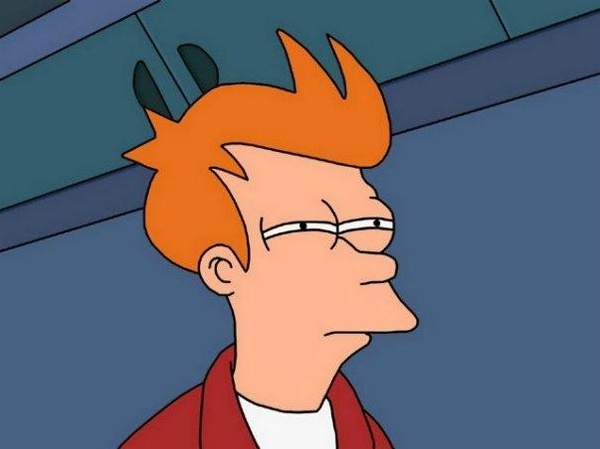
Where it comes from: knowyourmeme.com. Template images can carry their own rights; see template rights.